⚡ Executive Clinical Takeaways
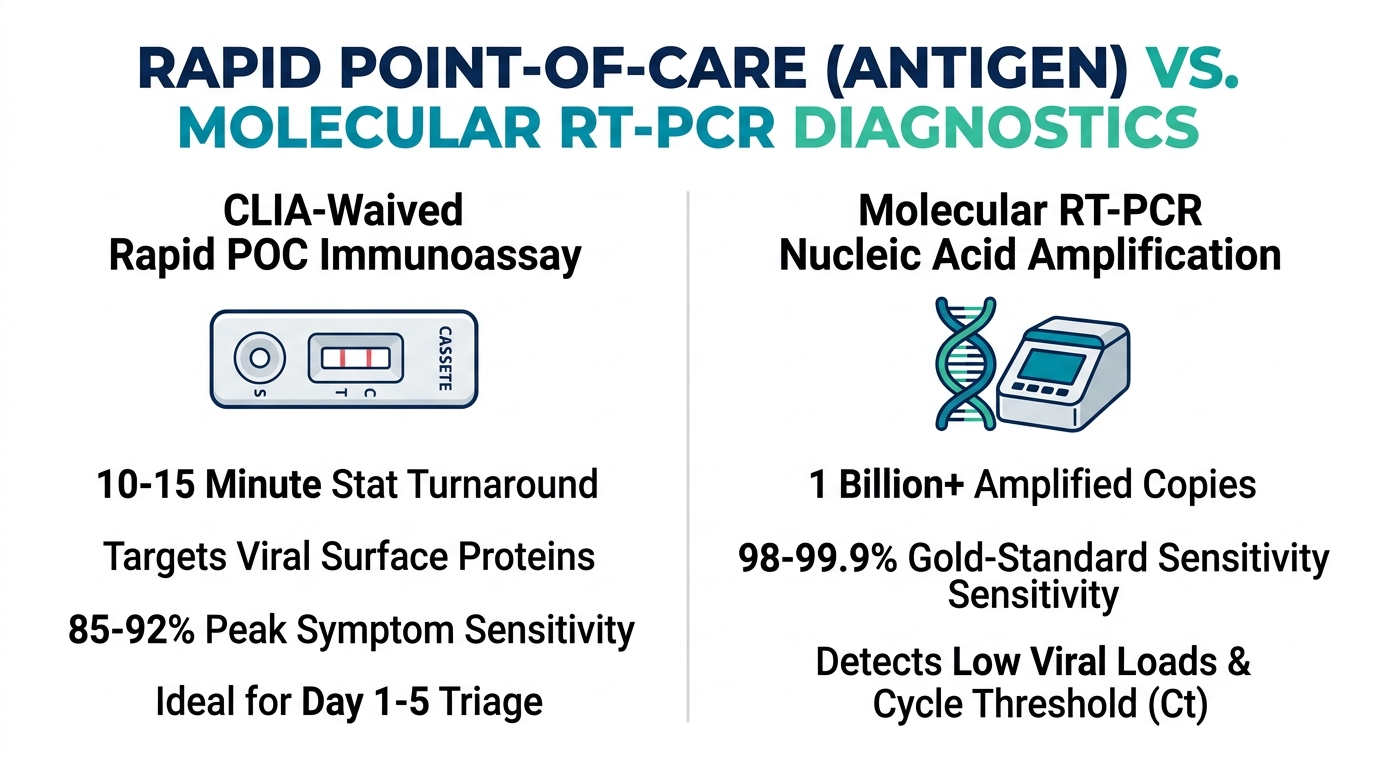
- Two Distinct Diagnostic Engines: Point-of-Care (POC) Rapid Antigen Assays detect viral or bacterial surface proteins in 10–15 minutes during peak contagiousness, whereas Molecular PCR / NAAT Assays amplify microscopic genetic sequences (DNA/RNA) up to a billion-fold for near-100% sensitivity.
- Targeted Antimicrobial Stewardship: Distinguishing viral pharyngitis or influenza from bacterial Group A Streptococcus (Strep throat) within 10 minutes prevents unnecessary antibiotic prescriptions while accelerating targeted antiviral therapy (such as Tamiflu or Paxlovid) within the crucial 48-hour treatment window.
- CLIA Quality Assurance: Operating under federal CMS CLIA Certificate #10D2347904, UR Next Lab runs daily positive and negative external liquid controls to ensure clinical-grade accuracy far superior to over-the-counter home test strips.
1. The Evolution of Modern Rapid Infectious Disease Diagnostics
When you wake up with a 101.5°F fever, body aches, a razor-blade sore throat, or a persistent cough—or when your child's school or your employer requires immediate clearance to return—waiting three to five days for a traditional hospital microbiology culture is simply not practical. Conversely, relying on an expired pharmacy home test strip that has been stored in a warm medicine cabinet often yields false reassurance.
At UR Next Lab and Services Solutions, LLC (6015 Chester Cir Ste 108, Jacksonville, FL 32217), we bridge the gap between speed and clinical certainty by offering both FDA-cleared CLIA-Waived Point-of-Care (POC) Rapid Diagnostics (delivering actionable results in 10 to 15 minutes) and Molecular RT-PCR / NAAT Amplification Panels. Understanding the biochemical difference between antigen immunoassays and nucleic acid amplification helps you and your physician select the exact right test for your stage of symptoms.
2. How Rapid Point-of-Care (POC) Lateral Flow & Optical Immunoassays Work
Point-of-Care antigen tests are engineered around highly specific monoclonal antibodies locked onto a chromatographic nitrocellulose membrane or optical fluorescence cartridge. When our clinician collects a gentle anterior nasal or throat swab and elutes the specimen into an extraction buffer, any viral nucleocapsid proteins or bacterial cell-wall carbohydrate antigens present in the sample bind to conjugated detector antibodies.
- Speed & Actionability: Because POC immunoassays detect existing pathogen proteins directly—without needing thermal cycling to copy DNA—results are ready in 10 to 15 minutes while you wait comfortably at our clinic.
- High Specificity (>98%–99%): When a professional CLIA-waived rapid test turns positive for Influenza A, Influenza B, COVID-19, RSV, or Group A Strep, false positives are exceedingly rare. You can immediately share the certified clinical report with your physician or telehealth provider to call in a prescription that same hour.
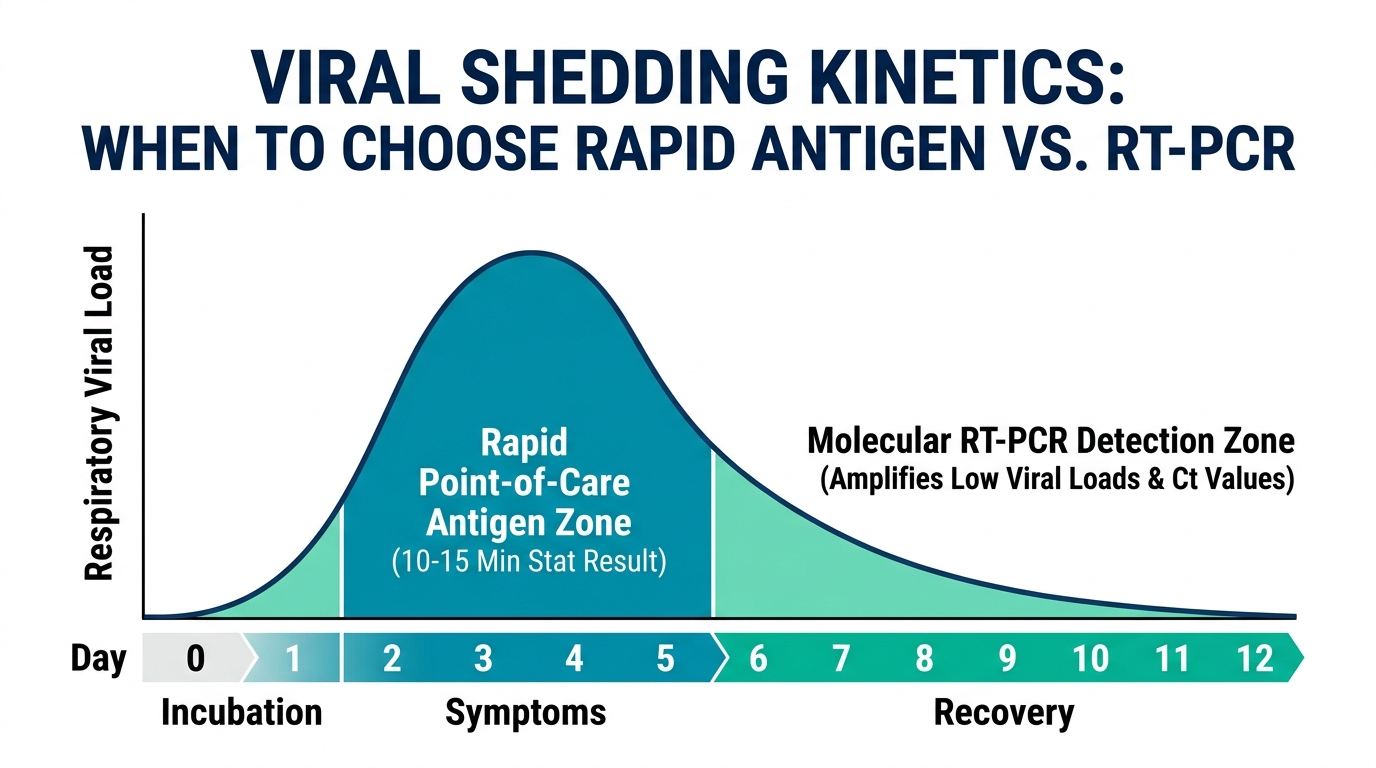
- The Viral Load Threshold: Rapid antigen tests perform best during Days 1 through 5 of active symptoms, when viral shedding in the upper respiratory tract is high (typically >105 viral copies/mL).
3. How Molecular RT-PCR & Nucleic Acid Amplification Tests (NAAT) Work
What if you were exposed to an infected household member 48 hours ago and haven't developed peak symptoms yet, or what if your rapid antigen test is negative despite classic symptoms? That is where Reverse Transcription Polymerase Chain Reaction (RT-PCR) and Isothermal Nucleic Acid Amplification (NAAT) shine as the undisputed gold standard of laboratory medicine.
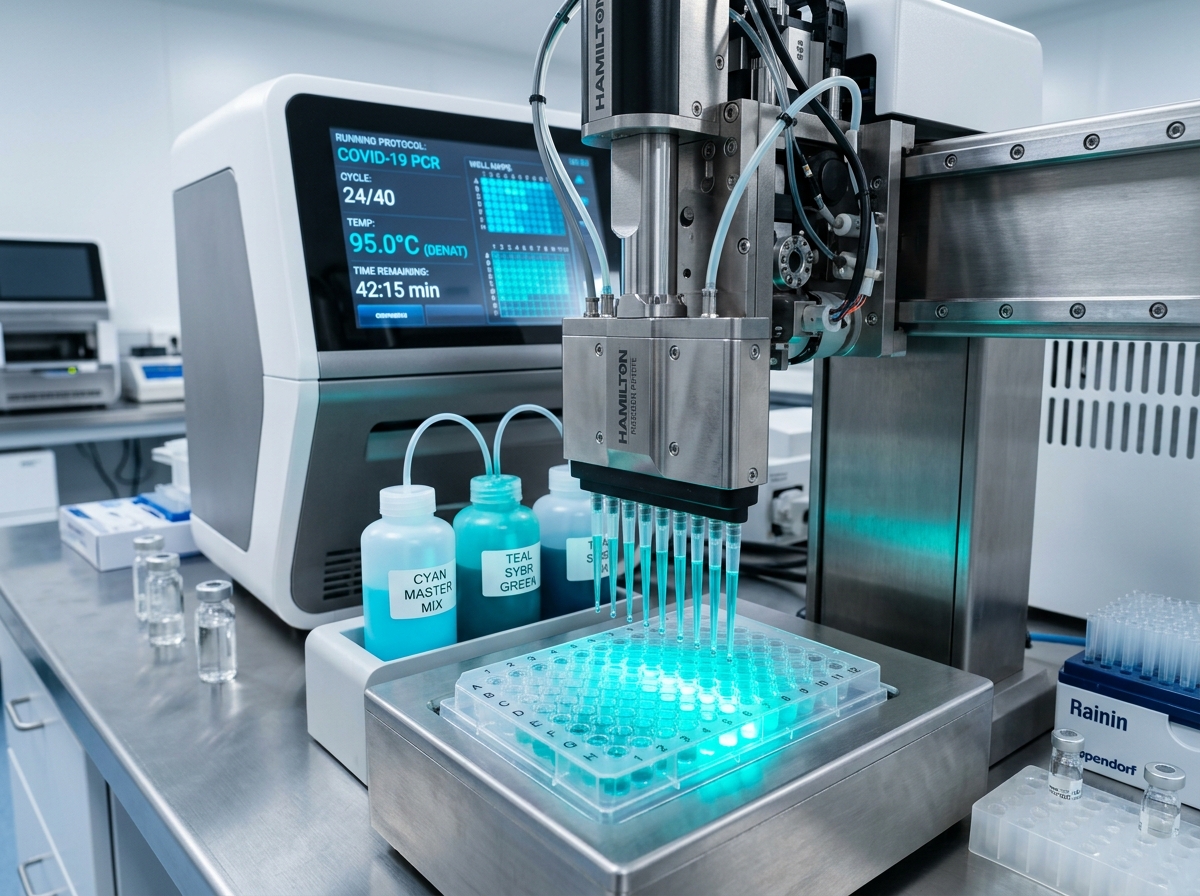
Instead of looking for surface proteins, molecular PCR extracts the pathogen's genetic code (RNA or DNA), converts viral RNA into complementary DNA (cDNA) via reverse transcriptase enzymes, and uses thermal cycling primers to double the target genetic sequence every 60 seconds. Within 35 to 40 amplification cycles, a single microscopic viral molecule is multiplied into over one billion identical copies, tagged with fluorescent probes detected by laser optics.
Because of this exponential amplification, molecular PCR can detect as few as 100 to 500 viral copies per milliliter—identifying infections days before a rapid antigen strip turns positive and remaining sensitive late into recovery.

4. Differentiating the "Tripledemic": COVID-19, Influenza A/B & RSV Multiplex Testing
In Northeast Florida, respiratory viruses circulate year-round due to travel and indoor air conditioning, with major surges from autumn through spring. Clinically, early SARS-CoV-2 (COVID-19), Influenza A & B, and Respiratory Syncytial Virus (RSV) produce virtually indistinguishable symptoms: fever, chills, myalgia (muscle aches), headache, nasal congestion, and cough.
Guessing which virus you have is risky because the medical treatments are completely incompatible: Oseltamivir (Tamiflu) inhibits the neuraminidase enzyme of Influenza A and B (and must be started within 48 hours of symptom onset), whereas Nirmatrelvir/Ritonavir (Paxlovid) targets the SARS-CoV-2 main protease. At UR Next Lab, our Multiplex COVID-19 + Influenza A/B + RSV Combo Panel screens for all four respiratory pathogens from a single gentle nasal swab in just 15 minutes.


5. Rapid Group A Strep, Mononucleosis & H. Pylori Point-of-Care Diagnostics
Beyond respiratory viruses, our Point-of-Care suite provides immediate clarity for acute throat and gastrointestinal complaints:
- Group A Streptococcus (Rapid Strep A): Up to 70% of adult sore throats are viral, yet untreated bacterial Streptococcus pyogenes pharyngitis can lead to peritonsillar abscess, scarlet fever, or post-streptococcal rheumatic heart complications. Our 10-minute Strep A throat swab identifies bacterial antigen immediately.
- Infectious Mononucleosis (EBV Heterophile Antibody): Teenagers and young adults presenting with severe tonsillar exudates, posterior cervical lymphadenopathy, and profound fatigue frequently test negative for Strep A—because the culprit is Epstein-Barr Virus (Mono). Furthermore, prescribing amoxicillin to a patient with undiagnosed Mono triggers a generalized maculopapular skin rash in up to 90% of cases! Running a 10-minute capillary blood Mono test alongside Strep A avoids this classic clinical pitfall.
- Helicobacter pylori (H. pylori) Screening: Chronic epigastric burning, bloating, or peptic ulcer symptoms are strongly linked to H. pylori bacterial colonization of the gastric mucosa—easily screened via our rapid point-of-care immunoassay.
6. Rapid Urinalysis (10-Parameter Dipstick) vs. Urine Culture & Sensitivity
Urinary tract symptoms—dysuria (burning), frequency, urgency, or suprapubic discomfort—require immediate evaluation to prevent ascending pyelonephritis (kidney infection). UR Next Lab performs a 10-Parameter Clinical Urinalysis (UA) in 5 minutes, measuring Leukocyte Esterase (white blood cell enzyme), Nitrites (produced by Gram-negative bacteria like E. coli converting urinary nitrates), Specific Gravity, pH, Protein, Glucose, Ketones, Bilirubin, Urobilinogen, and Occult Blood. When leukocytes or nitrites are positive, we seamlessly reflex the specimen to a Urine Culture & Antibiotic Susceptibility Panel to identify the exact organism and minimum inhibitory concentration (MIC) of antibiotics.
7. Why Federal CLIA Certification (#10D2347904) Beats Pharmacy At-Home Strips
Why visit a CLIA-certified clinical laboratory instead of picking up a retail box at a pharmacy? Under federal Centers for Medicare & Medicaid Services (CMS) regulations (CLIA Certificate #10D2347904), every reagent lot in our Jacksonville facility undergoes temperature-logged cold-chain storage, external positive and negative liquid quality control verification, standardized anatomical swab collection by trained specialists, and official physician-signed laboratory reporting accepted by employers, airlines, universities, and surgical centers.
8. Clinical Comparison Table: Point-of-Care (POC) vs. Molecular PCR
| Diagnostic Feature | CLIA-Waived Point-of-Care (POC) | Molecular RT-PCR / NAAT Assay |
|---|---|---|
| Biochemical Target | Pathogen Surface Proteins (Antigens) or Host Antibodies | Pathogen Genetic Sequence (DNA or RNA Amplification) |
| Turnaround Speed | 10–15 Minutes (In-Clinic Immediate Result) | 24–48 Hours (Reference Molecular Instrumentation) |
| Clinical Sensitivity | 88%–95% during acute symptomatic days (Days 1–5) | 99.2%–99.9% (Detects pre-symptomatic & low viral load) |
| Clinical Specificity | >98.5%–99.5% (Positive results are highly definitive) | >99.8% (Gold-standard genetic confirmation) |
| Primary Clinical Use Cases | Acute fever, sore throat, cough, return-to-work/school clearance | Early exposure screening, negative rapid reflex, pre-surgical clearance |
9. Clinical Decision Guide: When to Choose POC vs. PCR
- Choose a 15-Minute Rapid POC Test When: You have had active symptoms (fever, sore throat, cough, congestion, or burning urination) for 1 to 5 days and want an immediate certified answer today so your doctor can prescribe targeted medication.
- Choose or Add a Molecular PCR / Culture Reflex When: You had a recent high-risk exposure with no symptoms yet, your rapid antigen test is negative despite strong clinical symptoms, or you require an official PCR travel/surgical clearance report.
10. Walk Into UR Next Lab Today for 15-Minute Answers
Stop guessing whether your symptoms are COVID-19, Flu, Strep, RSV, or seasonal allergies. Walk directly into UR Next Lab Service Solutions at 6015 Chester Cir Ste 108, Jacksonville, FL 32217 Monday through Friday (8:00 AM – 6:00 PM) and leave with certified clinical answers in 15 minutes.
Need a 15-Minute Rapid Test Right Now?
Walk-ins are always welcome at our Southside Jacksonville facility, or reserve your rapid Point-of-Care slot online.